
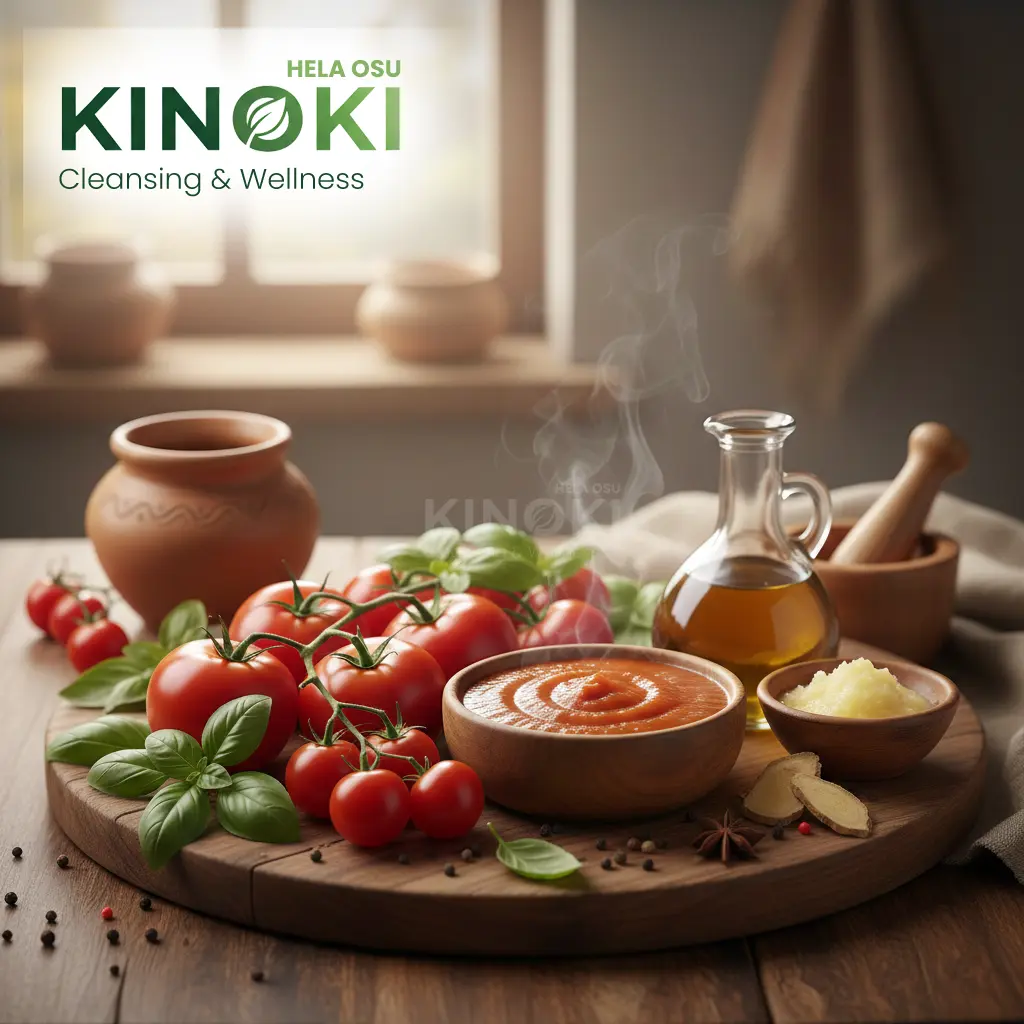
The Tomato: A Synergistic Blend of Ancient Wisdom and Modern Science
Often mistaken for a simple culinary staple, the tomato ( Solanum lycopersicum ) is actually a powerhouse of pharmacological complexity . Whether viewed through the lens of modern biochemistry or the ancient framework of Ayurveda, this vibrant fruit offers significant therapeutic benefits - provided you know how to prepare it .
1. The Ayurvedic Perspective: Balancing the "Heat"
In Ayurveda, the tomato is categorized under Shaka Varga (vegetable group) and is evaluated by its Rasa Panchaka , or energetic profile .
Taste (Rasa): Primarily Amla (sour) and Madhura (sweet) . The sourness stimulates saliva and digestive enzymes, acting as an excellent appetizer that stokes the Agni (digestive fire) .
Potency (Virya): Unlike most fruits, the tomato has an Ushna (heating) potency .
Doshic Impact: * Vata: Its heating and moist qualities help balance the cold, dry nature of Vata .
Pitta: Due to its acidic and heating nature, excessive consumption can aggravate Pitta, potentially leading to skin rashes or acid reflux .
Kapha: While raw tomatoes can increase mucus, cooking them with pungent spices like black pepper and ginger can stimulate a sluggish Kapha metabolism .
2. Modern Nutritional Superpowers
Beyond its energetic qualities, clinical analysis highlights the tomato's dense nutritional profile .
Heart Health: Regular consumption is linked to a 36% reduction in hypertension risk in older adults . The antioxidants lycopene and Vitamin C inhibit the oxidation of LDL ("bad") cholesterol, preventing arterial plaque formation .
Vision & Bones: Rich in Vitamin A precursors, tomatoes help prevent night blindness and cataracts . Additionally, they provide up to 20% of the daily required Vitamin K , essential for bone mineralization and preventing osteoporosis .
Skin Protection: Tomatoes act as “internal sun protection” . Lycopene and beta-carotene help neutralize UV-induced damage, while Vitamin C supports collagen synthesis to maintain skin firmness .
Oncology: Higher intake of tomato products (specifically sauce) is associated with a 20% to 35% reduction in the risk of prostate cancer progression .
3. The Science of Preparation: Raw vs. Cooked
A critical discovery in nutritional science is that raw tomatoes are not the most bioavailable form .
| Processing State | Lycopene Structure | Bioavailability |
|---|---|---|
| Raw, Whole | All-trans isomer (Stable chain) | Low |
| Cooked/Heated | Cis-isomer (Kinked chain) | High |
| Cooked with Oil | Optimized micelle formation | Maximum |
Pro Tip: Because lycopene is fat-soluble, cooking tomatoes with healthy fats like olive oil, coconut oil, or ghee exponentially increases nutrient absorption . This mirrors the traditional Sri Lankan preparation of Sothi , where tomatoes are cooked in coconut milk .
4. Clinical Precautions
While tomatoes are generally healthy, certain conditions require caution:
Gastritis & GERD: The organic acids and heating potency can exacerbate heartburn and abdominal pain .
Kidney Stones: Contrary to popular myths, tomatoes are a low-oxalate food (5 mg vs. 600 mg in spinach) and are generally safe for those prone to stones .
Storage: Never refrigerate tomatoes! Temperatures below 55°F (degree Fahrenheit) or 12.778°C (degree Celsius) cause irreversible genetic changes that destroy flavor and damage texture .
Summary
The tomato is a "functional food" that bridges the gap between diet and medicine . By integrating Ayurvedic wisdom - using warming spices and healthy fats - with modern biochemistry, you can turn a simple meal into a powerful tool for long-term health

Leave a comment
Your email address will not be published. Required fields are marked *

